
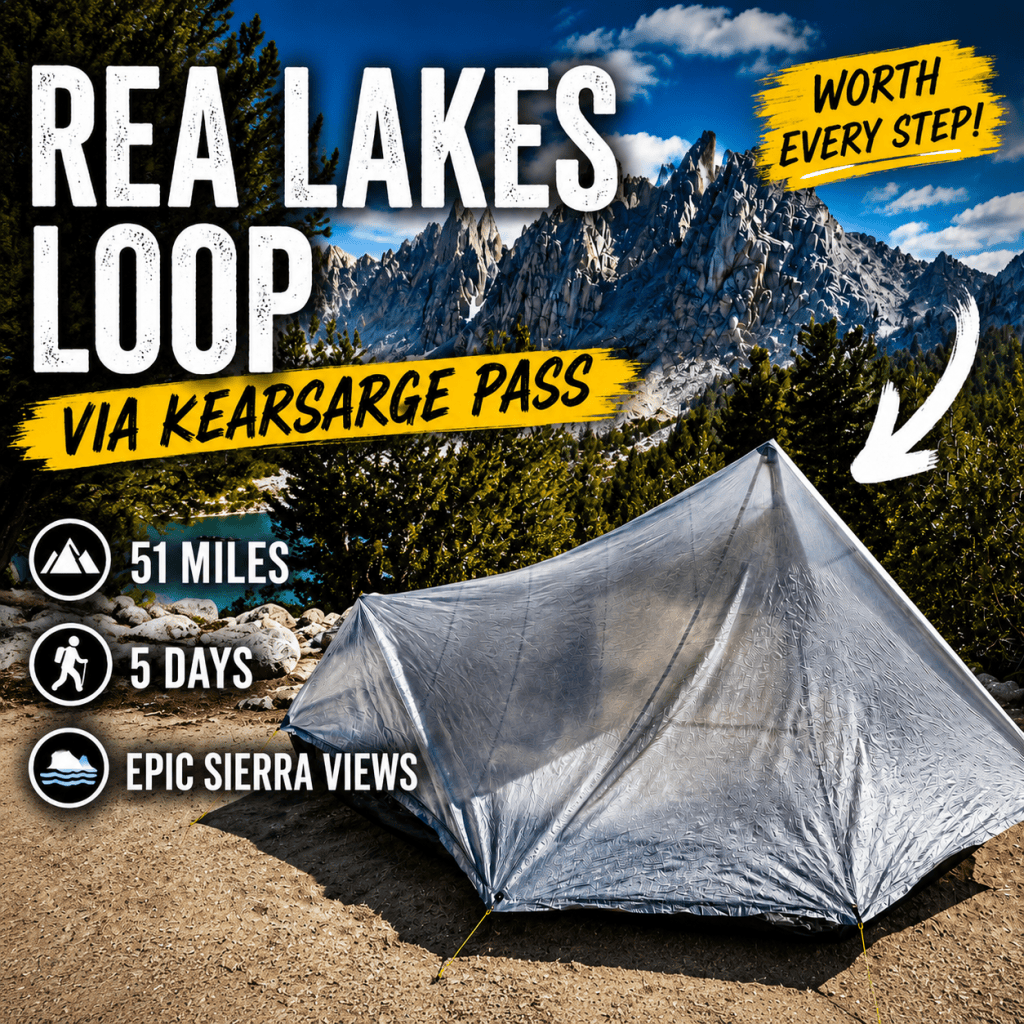
The Rae Lakes Loop has been on my bucket list of Sierra backpacking trips for years, and this adventure reminded me exactly why. Towering granite peaks, crystal-clear alpine lakes, mountain passes above 11,000 feet, incredible trout fishing, and some of the most breathtaking scenery in California combine to make this one of the premier backpacking destinations in the country.
For this trip, I decided to take a slightly different approach than the traditional Rae Lakes Loop. Instead of starting at Roads End in Kings Canyon National Park, I entered via Kearsarge Pass, adding roughly 10 extra miles to the route and bringing my total distance to about 51 miles. While it makes for a longer trip, entering through Kearsarge Pass can make obtaining permits easier and provides spectacular scenery from the very first mile.
This hike was also deeply personal. I dedicated this trip to my brother, who passed away from a heart attack just over a year ago. Spending time in the mountains has always given me perspective, and there couldn’t have been a better place to honor his memory than in the Sierra Nevada.
The Challenge Begins at Kearsarge Pass
Every Sierra backpacking trip reminds me that elevation is a great equalizer.
I began the hike at approximately 9,000 feet and immediately started climbing toward Kearsarge Pass, which sits above 11,000 feet before continuing through even higher terrain during the remainder of the trip. Coming from Pennsylvania—where I live at only a few hundred feet above sea level—I knew acclimatization would be one of my biggest challenges.
Looking back, I would definitely spend an extra day acclimating at the trailhead before beginning the hike. Instead, I chose the comfort of a hotel over proper acclimation, and I certainly paid for it during that first long climb.
The ascent to Kearsarge Pass was a grind. Nearly three hours of climbing at altitude tested both my lungs and my legs, but once I reached the summit, every difficult step became worthwhile. The panoramic views stretched across endless granite peaks, alpine lakes, and rugged wilderness that simply can’t be appreciated through photographs alone.
Sierra Weather Keeps You Guessing
One thing I love about backpacking in the Sierra is that the weather constantly keeps you on your toes.
As I descended from Kearsarge Pass toward Bullfrog Lake, dark storm clouds began building over the mountains. Afternoon storms are common during the summer, and while many move through quickly, you always have to be prepared for rain, hail, or even lightning.
This storm turned into hours of steady rain after I reached camp. It wasn’t what I typically expect from Sierra summers, but that’s part of the adventure. Backpacking isn’t about perfect conditions—it’s about adapting to whatever nature decides to throw your way.
Adjusting the Plan
One lesson I’ve learned after years of backpacking is that successful trips require flexibility.
I originally planned to hike 14 miles on my first day, but I arrived at camp much earlier than expected. Instead of pushing farther simply because it was on my itinerary, I decided to stop early and enjoy the afternoon.
That decision turned out to be a great one.
Not only did I find a campsite with a nearby creek full of trout, but I also had access to a bear box and avoided hiking through several hours of heavy rain. Sometimes slowing down makes for a much better backpacking experience.
Backpacking at High Elevation
The combination of altitude, heat, and long miles made this one of the more physically demanding trips I’ve completed in recent years.
California was experiencing a heat wave, and even at elevations above 10,000 feet, the exposed granite reflected heat throughout much of the day. Add in the effects of limited acclimatization and a knee injury that had interrupted my training before the trip, and every mile required extra effort.
Despite those challenges, each morning I woke up excited to continue.
Every turn in the trail revealed another incredible alpine lake, towering granite wall, or sweeping mountain vista that reminded me why the Sierra remains one of my favorite places to backpack.
A Simple Backpacking Breakfast That Works
One tip I share during the trip is my favorite trail breakfast.
Rather than spending valuable time cooking every morning, I mix powdered milk with two servings of Carnation Breakfast Essentials to create a quick, high-calorie breakfast that provides approximately 420 calories along with added vitamins and protein.
This simple breakfast lets me break camp quickly and take advantage of the coolest hours of the day, allowing me to cover more miles before the afternoon heat sets in.
It’s a small trick, but one that’s served me well on many backpacking trips.
Rae Lakes Never Disappoints
After several days on the trail, I finally reached the highlight of the journey—Rae Lakes.
It’s hard to put this place into words.
Surrounded by granite peaks, pristine water, and endless mountain scenery, Rae Lakes truly lives up to its reputation as one of the most beautiful backpacking destinations in the Sierra.
Since I arrived earlier than expected, I spent the afternoon relaxing around camp, exploring the shoreline, and enjoying some fly fishing before settling in for another peaceful night in the mountains.
Those slower moments often become my favorite memories.
Lessons Learned
Every backpacking trip teaches something new, and this one was no exception.
If I could change anything, I would spend more time acclimating before starting the hike. Backpackers should always consult with their doctors about their physical status, how to acclimate and medications that can help ease the impact of high elevation backpacking. I often use medications to ease the impact in consultation with my doctor but that still doesn’t remove the need to have an acclimation plan.
I also packed more food than I actually needed. I planned for nearly 3,000 calories per day, but found that I was only eating around 2,000 calories while hiking at altitude.
The extra food meant carrying unnecessary weight throughout much of the trip.
These are the kinds of small lessons that make every adventure a valuable learning experience.
Why I Entered Through Kearsarge Pass
One question I often receive is why I chose to enter via Kearsarge Pass instead of hiking the standard Rae Lakes Loop.
For me, there were two major advantages.
First, permits are often easier to obtain.
Second, beginning with Kearsarge Pass provides incredible scenery almost immediately while allowing for a slightly different experience than the traditional route.
Although it adds roughly ten additional miles, I found the extra distance well worth the effort.
Final Thoughts
Completing the Rae Lakes Loop through Kearsarge Pass was everything I hoped it would be.
Yes, it was physically demanding.
Yes, the altitude challenged me.
Yes, the heat made several days tougher than expected.
But every difficult climb was rewarded with world-class scenery, peaceful alpine lakes, excellent fishing, unforgettable campsites, and the quiet satisfaction that comes from spending several days immersed in one of America’s greatest wilderness areas.
Backpacking trips aren’t always about reaching a destination—they’re about the experiences you collect along the way. This journey gave me plenty of those, and I’m already looking forward to returning.
Watch the Full Video
While this article highlights the major moments from my adventure, the video tells the complete story.
Join me as I climb over Kearsarge Pass, hike through the stunning Sierra backcountry, battle changing weather, share backpacking tips, fish alpine lakes, and experience every step of this incredible 51-mile journey around the Rae Lakes Loop.
If you’re planning your own Rae Lakes Loop backpacking trip—or simply enjoy exploring some of the most spectacular wilderness in California—I think you’ll enjoy seeing the adventure unfold on video.
Be sure to watch the full video, and if you’ve hiked the Rae Lakes Loop or have questions about permits, gear, or planning your own trip, I’d love to hear from you in the comments.
Happy hiking, and I’ll see you on the trail.


Leave a Reply