
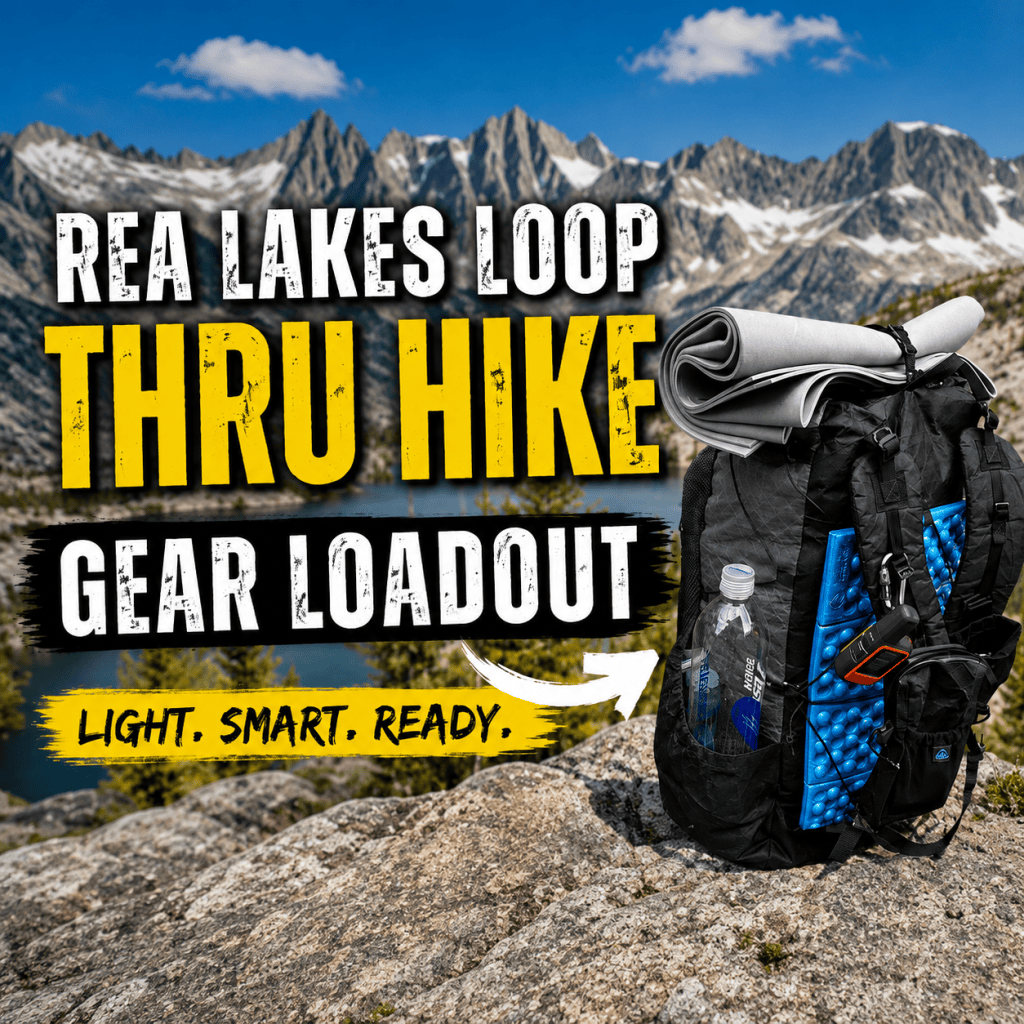
Preparing for a backpacking trip in the Sierra Nevada is one of my favorite parts of every adventure. Before I ever step onto the trail, I spend a lot of time refining my gear, eliminating unnecessary weight, and making sure every piece of equipment has earned its place in my backpack.
For my upcoming 51-mile Rae Lakes Loop backpacking trip, I’ll be hiking over four days through some of California’s most beautiful mountain scenery. Because I’m entering from a different trailhead than the traditional route, my trip will include about ten additional miles, making careful gear selection even more important.
This year I’ve managed to put together an 11-pound base weight, with a fully loaded pack weighing approximately 16 pounds before adding water. That lightweight setup allows me to move efficiently through the mountains while still carrying everything I need for safety and comfort.
Why I Chose an Ultralight Setup
I’ve spent years backpacking throughout the Sierra Nevada, testing equipment in every season and under a wide range of conditions. Experience has taught me that carrying less weight doesn’t mean sacrificing comfort—it means choosing gear that performs multiple functions while remaining dependable.
Every item in my pack has been selected because it has proven itself on previous trips or because I’m testing it under conditions where I believe it will excel.
Clothing Designed for the Sierra
July in the Sierra Nevada typically brings warm days, cool evenings, intense sun, and occasional afternoon storms.
My clothing system is built around lightweight, moisture-wicking layers that keep me comfortable whether I’m climbing steep passes or relaxing around camp.
Some highlights include:
- HOKA Speedgoat 7 trail runners
- Darn Tough hiking socks
- Outdoor Vitals merino wool hiking shirt
- Outdoor Vitals hiking shorts
- Buff and sun protection for high-elevation exposure
I’ve also packed lightweight insulation, rain protection, and sleep clothing so I’m prepared if temperatures drop unexpectedly in the mountains.
My Ultralight Backpack
One of the biggest contributors to my low base weight is my Zpacks Nero frameless backpack.
At just over eleven ounces, it comfortably carries everything I need for trips lasting four to five days. Since my total pack weight remains under twenty pounds, this pack performs extremely well without the need for a traditional frame.
Shelter That Balances Weight and Protection
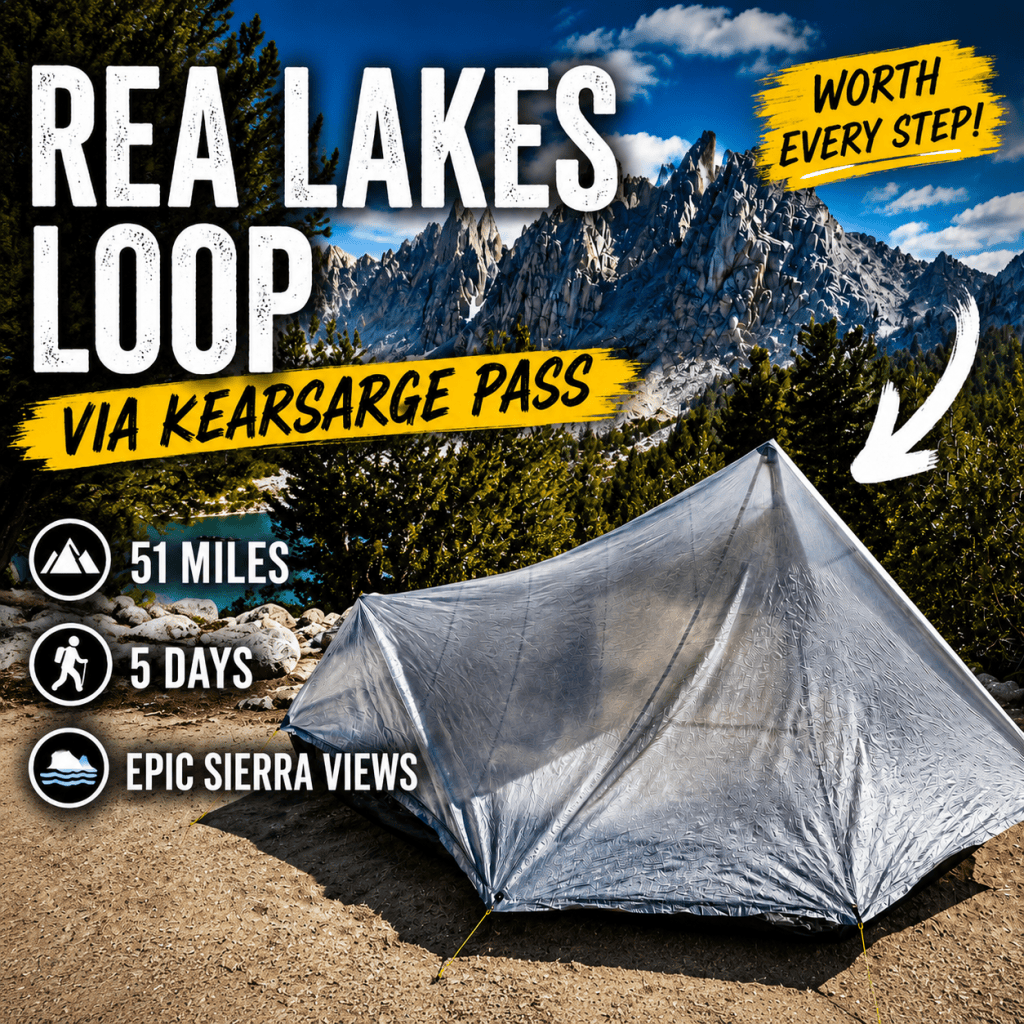
For this trip, I’ll be using the Gossamer Gear Whisper, an incredibly lightweight trekking pole shelter.
Because July weather in the Sierra is generally stable compared to other mountain ranges, this shelter gives me excellent weather protection while dramatically reducing pack weight.
Combined with a lightweight groundsheet and trekking poles, my entire shelter system comes in at under one pound.
Sleep System Built for Mountain Nights
Even during the summer, nighttime temperatures in the Sierra can drop into the 30s.
To stay comfortable, I’m bringing:
- Hammock Gear 20-degree quilt
- Nemo Elite sleeping pad
- Outdoor Vitals inflatable pillow
This combination has kept me comfortable on many Sierra adventures while remaining incredibly lightweight.
Food, Water, and Bear Safety
Since bear canisters are required throughout much of the Rae Lakes Loop, I’ll be carrying a BV450 bear canister.
For water, I rely on the Platypus QuickDraw filter, paired with lightweight water bottles and additional storage capacity for camp. Having extra water storage allows me to collect enough water once and relax around camp instead of making repeated trips to nearby streams.
Electronics That Actually Earn Their Weight
Electronics can quickly become one of the heaviest categories in a backpack.
I only carry gear that provides real value on the trail:
- Garmin InReach Mini 2 for emergency communication
- Nitecore NU25 headlamp
- 10,000 mAh battery bank
- Suunto Vertical Solar GPS watch
- Zero Pump for inflating my sleeping pad
These items help me stay safe, navigate efficiently, and document the adventure without carrying unnecessary weight.
Bringing a Little Fun Along
One item I’m especially excited about is my lightweight Tenkara fishing setup. At roughly seven ounces, it allows me to enjoy one of my favorite backcountry activities while adding very little weight to my pack. There’s nothing quite like catching trout in a crystal-clear Sierra stream after a long day of hiking.
Testing New Gear
Although much of this setup has been thoroughly tested over hundreds of miles in the Sierra, I’m also bringing a few newer pieces of equipment that I’ll be evaluating during this trip.
Once I return, I’ll share what worked, what didn’t, and whether any of these items will become permanent additions to my backpacking kit.
Watch the Complete Gear Breakdown
This article highlights the major pieces of my backpacking setup, but the video goes much deeper.
In the full video, I walk through every piece of gear individually, explain why I chose it, discuss the weight savings, share tips I’ve learned after years of backpacking in the Sierra Nevada, and show exactly how everything fits together into an 11-pound base weight.
If you’re planning your own Rae Lakes Loop adventure—or simply looking to reduce your pack weight for future backpacking trips—I think you’ll find plenty of ideas that can improve your own gear setup.
I hope to see you out on the trail.


Leave a Reply